
How electrical objectives work
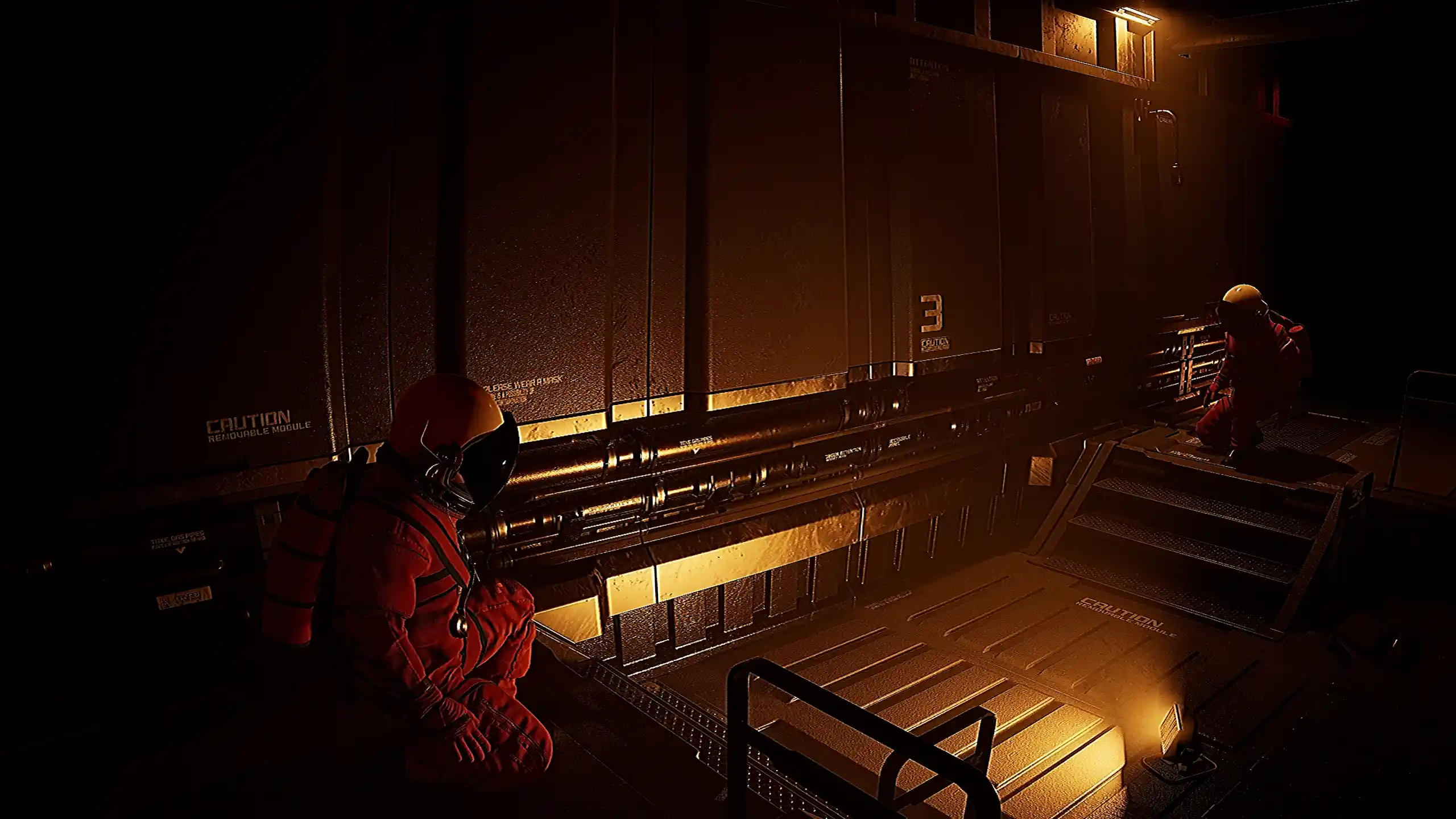
Restoring the base is the run. Every objective below is a panel you stand at, facing a screen, with your back to a corridor — which is the real difficulty, not the puzzle.
Layouts are generated
Panels are laid out per run. A solution you memorised last night will not transfer — the rule is what transfers, which is what this page teaches.
Moves are budgeted
Most panels allow a limited number of presses. Running out reports the failure and resets rather than locking you out; the cost is time and noise.
Two roles beat one
Every puzzle is solvable solo. They are faster when one operator reads the target aloud and another works the panel — and safer when a third watches the door.
The five puzzle types
Currently live: Electric Switch, Circuit Breaker, Lights Out, Circuit Trace, Circuit Reroute. Electric Switch shipped first; the other four arrived in Update 0.6.
Dual-dial power stabilisation
Electric Switch
A switch bank wired to two dials. Toggle the combination until both dials settle inside their safe bands at the same time.
- Win condition
- Both dials inside their green zones simultaneously
- Watch for
- Dial response lags slightly behind the switch
How to solve it
- Change one switch at a time. Each switch affects the two dials differently; flipping three at once tells you nothing about any of them.
- Wait for the needle to settle before judging a switch. The response lags, and reacting to a mid-swing needle is how squads chase their own tail.
- Find the opposing pair. Some switches move the dials in opposite directions — those are the ones that let you balance rather than overshoot.
- Overshot? Flip the same switch back. Toggling it again reverses its effect; there is no penalty for undoing.
Co-op One player calls a dial each. “Left is in, right is high” is a faster read than one person glancing between both.
Load balancing
Circuit Breaker
A panel of breakers, each carrying a value. Switching a breaker on adds its value to the current load. Match the current load to the target load exactly.
- Win condition
- Current load equals target load — exact, not close
- Move budget
- Limited; the panel shows moves used against the cap
How to solve it
- Read every breaker value before touching one. This is a subset-sum problem, and it is solved by reading, not by flipping.
- Start from the largest value that does not exceed the target, then fill the remainder with smaller breakers.
- Overshooting is not “nearly right”. Stability needs an exact match, so a load one over reads exactly as wrong as a load ten over.
- Count the moves you will need before the first press. Each flip spends budget whether or not it was part of the answer.
Co-op Have the second player add the values out loud while the first flips. Two people doing mental arithmetic separately is how you end up one over.
Corroded switch matrix
Lights Out
A grid of couplers. Pressing a cell flips that cell and its orthogonal neighbours — up, down, left and right. Solved when the grid matches the target pattern.
- Win condition
- Current pattern matches the target pattern
- The catch
- You cannot change one cell without changing its neighbours
How to solve it
- Solve the differences, not the lights. Compare current against target and mark only the cells that disagree. Those are the puzzle.
- Work top row down. Fix a wrong cell in the top row by pressing the cell beneath it, then move to the next row. Rows you have finished stay finished.
- You will press cells that already look correct. That press exists to flip its neighbours; this is the step that makes people think they are going backwards.
- Plan the row, then press. Toggling to see what happens burns the move budget fastest here.
Co-op One player reads the target aloud as coordinates while the other keeps their eyes on the working grid. Looking back and forth is what loses track.
Relay trace junction
Circuit Trace
The primary bus is degraded, so the backup pattern is set by hand. Toggle nodes until the current trace matches the target trace; the junction then locks and routes power itself.
- Win condition
- Current trace matches the target trace
- Readout
- Locked nodes indicate confirmed alignment
How to solve it
- Go node by node, in order. Unlike Lights Out, a node here is its own problem — work down the list rather than looking for a clever route.
- Trust the locks. A locked node is confirmed; leave it and move on rather than re-checking work you have already banked.
- Stability is the whole pattern. A single correct node does not stabilise the junction, so do not stop when it starts looking close.
Co-op The most mechanical of the five, and the best one to hand to whoever is calmest while the rest of the squad handles the corridor.
Redundant path overlay
Circuit Reroute
A tile grid with a fixed source and target. Build one unbroken powered path between them before the relays seal. Each tile you toggle costs a move.
- Win condition
- One continuous powered route from source to target
- Readout
- Powered tiles glow; dead or invalid tiles show red
How to solve it
- Trace the route with your eyes first. The move budget here is the strictest of the five — toggling to explore will run you out.
- Source and target are fixed. Route around them; trying to move an endpoint is wasted budget.
- Shortest path, not prettiest. Every tile on your route costs a move, so a detour that looks tidier is simply more expensive.
- Red means dead. A red tile is not a puzzle to solve, it is a wall to route around.
Co-op Agree the full route out loud before anyone touches a tile. This is the panel where two people improvising separately fails outright.
Practice terminal
Three of the panels, with the same rules they use in game — the Lights Out toggle, the exact-load breaker bank, and the source-to-target reroute. Every board is generated from a solution that exists, and nothing here is hunting you. That is the only difference.
The practice boards need JavaScript. The rules they drill are simple enough to read instead. Lights Out: press a cell and that cell plus the ones directly above, below, left and right of it all flip — fix the top row by pressing the row beneath it, then work down. Circuit Breaker: switched-on breakers add their value to the current load, which must equal the target exactly. Circuit Reroute: toggle tiles until one unbroken powered path joins the source to the target.
Things that work on every panel
Assign the roles out loud
- One operator. Two people pressing the same panel is how a move budget disappears.
- One reader. They hold the target and call it; the operator never looks away from the working grid.
- One watcher. Facing away from the panel, watching the corridor. This is a real job, not the spare person.
Use proximity voice deliberately
- Voice carries. A panel is exactly where you are stationary long enough for that to matter.
- Agree coordinates before you need them — “row two, third from left” beats “that one, no, that one”.
- When the watcher calls contact, the operator stops. A half-finished panel is recoverable; a downed squad in a lit room is not.
Puzzle FAQ
How many puzzle types are there?
Five are live: Electric Switch, Circuit Breaker, Lights Out, Circuit Trace, Circuit Reroute. Electric Switch shipped first; the other four arrived in Update 0.6. More puzzle variation is on the roadmap.
Can I solve puzzles alone?
Yes — every electrical objective can be completed solo, and the game supports 1–8 players. A squad is faster because the reading and the watching can be split off, not because anything is gated behind a second player.
What happens if I run out of moves?
Panels with a move budget report the failure and reset rather than locking you out permanently. You lose time and you have made noise standing still — both of which usually matter more than the reset.
Are the layouts always the same?
No. Layouts are generated per run, so memorising a solution does not carry over. Learning the rule each puzzle follows does, which is what this guide is for.
Take it into a run
Operator manual
Controls, co-op setup, and the rest of what happens between breach and extraction.
Systems Restored board
Most electrical objectives solved in one run. This guide is how people get on it.
Red Horizon dossier
Why the base needs restoring at all, and what NovaTech left behind when it failed.