
What Content Warning does brilliantly
Content Warning's hook is that the horror is the deliverable. You are not just surviving, you are performing, and the recording turns your squad's worst moments into the score. It is one of the sharpest ideas in co-op horror and nothing below diminishes it.
Where Blood Moon Horror goes instead
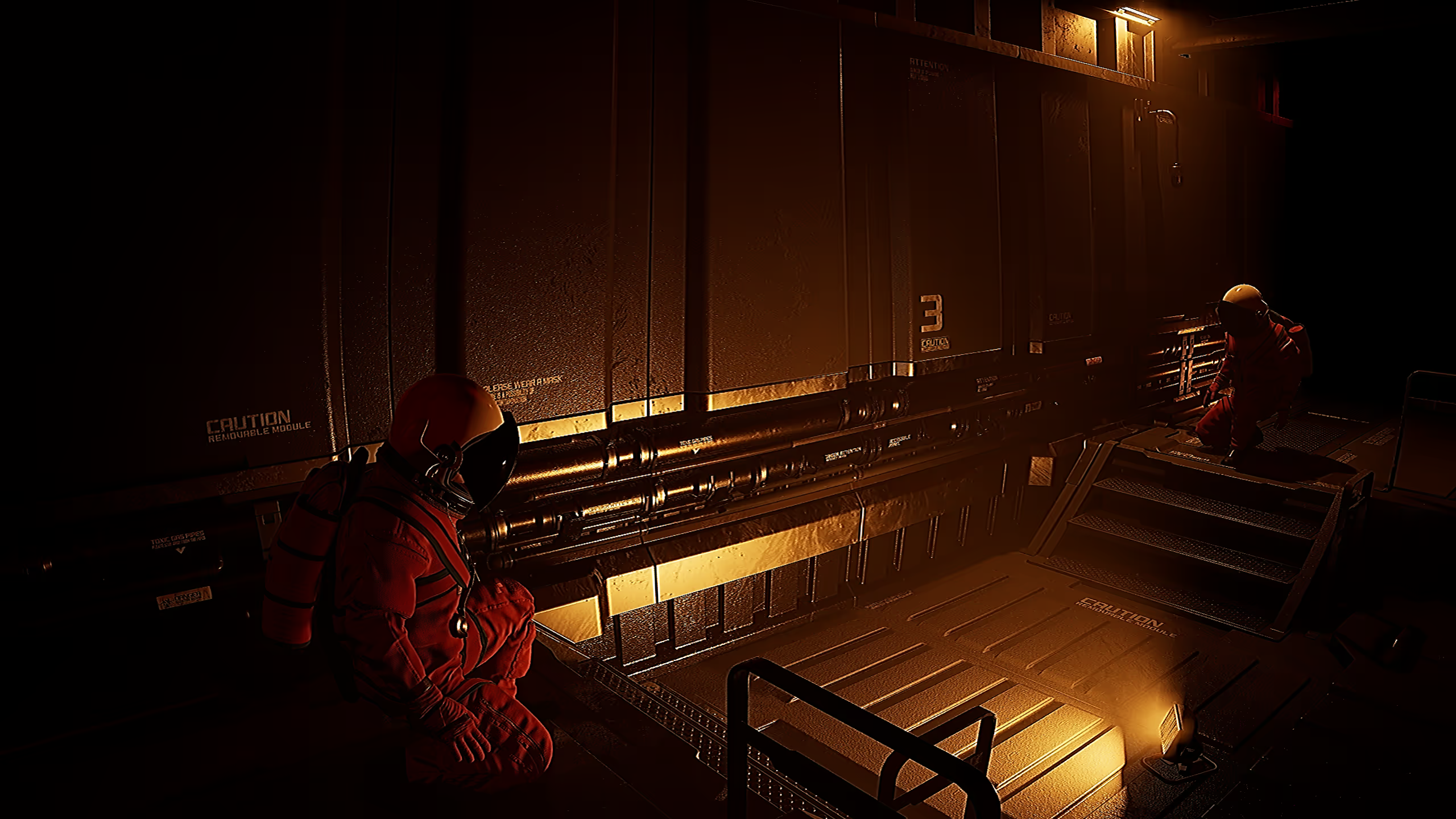
- No camera, no performance. Nothing is being recorded and nothing is scored on entertainment value. The objective is the base.
- No improvised weapons. Content Warning lets you swing things. Blood Moon Horror does not, at all.
- 8 players, not 4. Double the voices on proximity chat, and a facility big enough to split across.
- Light as a detection channel. Threats react to sound and movement - and to light, which most quiet-games leave out.
- A sealed, continuous place. Lunar Base Alpha is one facility with power, life-support and locked sectors, not a set of dives.
Tone: comedy versus dread
The honest difference is mood. Content Warning is funny by design - the recording frames disaster as content, which gives your squad permission to laugh. Blood Moon Horror is not built for that release. With no weapons, no camera and no score for bravado, a bad moment is just a bad moment, and the run gets quieter rather than louder.
Some squads love that. Others will find it airless and should stay with Content Warning. Both are legitimate - it depends whether your group wants to laugh at the horror or sit in it. The lore page gives a sense of the tone the game is going for.
What replaces the camera
Removing the recording objective leaves a gap, and it is fair to ask what fills it. In Blood Moon Horror the answer is the facility itself: power is down, life-support is failing, sectors are locked, and each of those is a job with a location and a procedure.
That gives a run structure Content Warning deliberately avoids. You are not improvising a bit for the camera - you are working a list while conditions get worse. Crucially, finishing jobs makes the run more dangerous rather than less, because restored power means light, and light is something the threats read. The puzzle guide documents the objectives from the live build.
Eight voices instead of four
Content Warning's four-player cap keeps the group together, which is what makes the comedy land - everyone witnesses the same disaster. Blood Moon Horror's eight-player cap does the opposite: the squad naturally fragments across a facility, and proximity voice means you only hear the people near you.
The result is a different social texture. Instead of one shared scene, you get partial information, half-heard warnings, and the specific dread of realising nobody has heard from two teammates in a while.
Which should your squad play tonight?
Play Content Warning for a funny, self-aware night with up to four friends.
Play Blood Moon Horror for a bigger squad, a straight-faced tone, and the specific tension of having no way to fight back. Start with the FAQ if you want to know what Early Access currently includes.
Questions, answered plainly
Does Blood Moon Horror have a camera mechanic?
No. There is no filming or footage objective. The mission is restoring the lunar base's systems, recovering NovaTech evidence, and extracting.
How many players does Blood Moon Horror support?
1 to 8 players, in online co-op or LAN, and it can be played solo. Content Warning supports up to 4.
Is Blood Moon Horror funny or serious?
Serious in tone. There is no scoring for bravado and no way to fight back, so runs tend to get quieter under pressure rather than more chaotic.
Keep comparing
Same squad, different night. The full comparison table puts all six games side by side.
Try it with your squad
Blood Moon Horror is in Steam Early Access for Windows PC, and there is a free demo. Read the full game info or the FAQ first.