
The shared philosophy
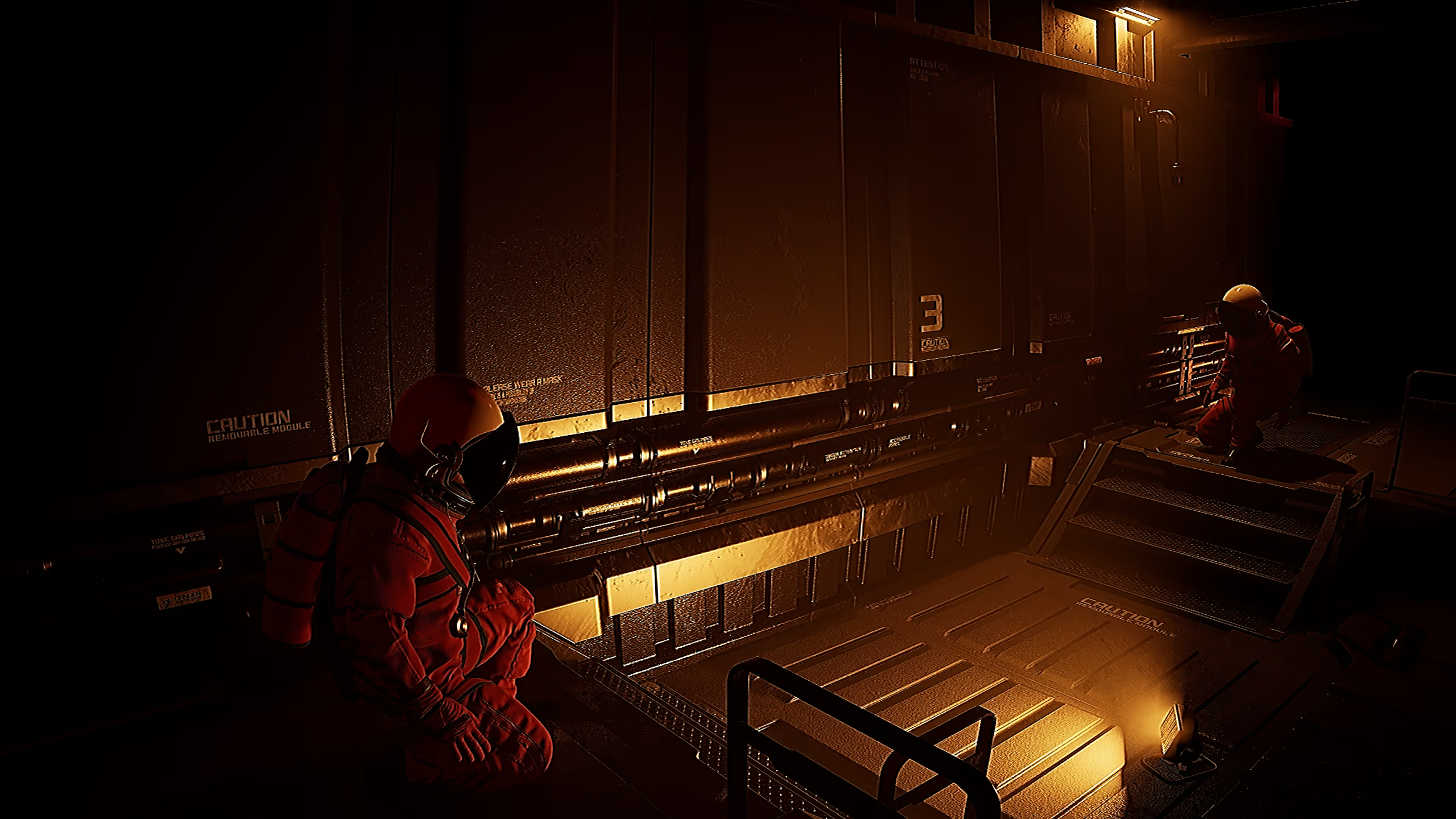
PANICORE and Blood Moon Horror agree on the thing most co-op horror compromises on: you never get to fight back. No weapon appears late. No improvised tool evens the odds. Both games also treat your actual microphone as an input to the threat, so going quiet is mechanical rather than atmospheric.
If PANICORE's specific tension is what you liked, this is the closest thing on the list - which is exactly why the differences are worth being precise about.
Where they diverge
- Squad size. 8 versus 4. Managing eight voices and eight light sources is a genuinely different coordination problem.
- Objective depth. PANICORE is fundamentally about finding the exit. Blood Moon Horror gives you work to do first: restore power, bring life-support back, solve electrical objectives, recover evidence - then extract.
- Light. PANICORE leans on footsteps and voice. Blood Moon Horror adds light as a third channel, so your flashlight is an active risk.
- Setting and story. A sealed lunar facility with a documented incident behind it, rather than an abstract locked space.
Progress makes it worse, on purpose
The design detail that most separates the two: in Blood Moon Horror, succeeding is dangerous. Restoring power lights corridors that were safely dark. Opening a sector connects spaces that were safely isolated. Every objective you complete widens what can reach you.
That gives a run an escalating shape rather than a flat search, and it is the main reason the game supports longer sessions than a pure escape loop. The puzzle guide shows what those objectives involve.
Coordinating eight people who cannot fight
No-combat horror gets harder to design as the squad grows, because more players usually means more safety. Blood Moon Horror leans the other way: eight people generate more noise, more light and more independent decisions, so scale is a liability rather than a cushion.
In practice squads settle into roles - someone on the objective, someone watching an approach, someone relaying between groups on proximity voice. None of those roles involve defending anyone, because there is no way to. The best a squad can do is notice something early and be somewhere else.
Early Access, honestly
Blood Moon Horror is in Steam Early Access. The core loop is playable - objectives, threats, progression, cosmetics, the full 1-8 range - but content and balance are still being worked on, and reviews so far reflect a game still finding its footing.
If you want the more contained, finished experience right now, PANICORE is the safer pick. If the larger squad and the lunar premise are what appeal, there is a free demo so you can test the feel with your group before paying. The roadmap covers what is planned next.
Which should your squad play tonight?
Play PANICORE for a tight, focused escape with up to four.
Play Blood Moon Horror for the same no-combat rule stretched over a longer mission with a larger squad and more to actually do. See the game info page for the full system list.
Questions, answered plainly
Is Blood Moon Horror a no-combat game like PANICORE?
Yes. There are no weapons and no improvised tools at any point. Survival depends on light discipline, sound discipline, positioning, and completing objectives.
Do enemies hear your microphone?
Yes. Threats react to sound including proximity voice chat, as well as to light and movement.
What do you do besides escape?
Restore power and life-support, open locked sectors, solve electrical objectives, and recover NovaTech documents explaining the Red Horizon incident - then extract.
Keep comparing
Same squad, different night. The full comparison table puts all six games side by side.
Try it with your squad
Blood Moon Horror is in Steam Early Access for Windows PC, and there is a free demo. Read the full game info or the FAQ first.