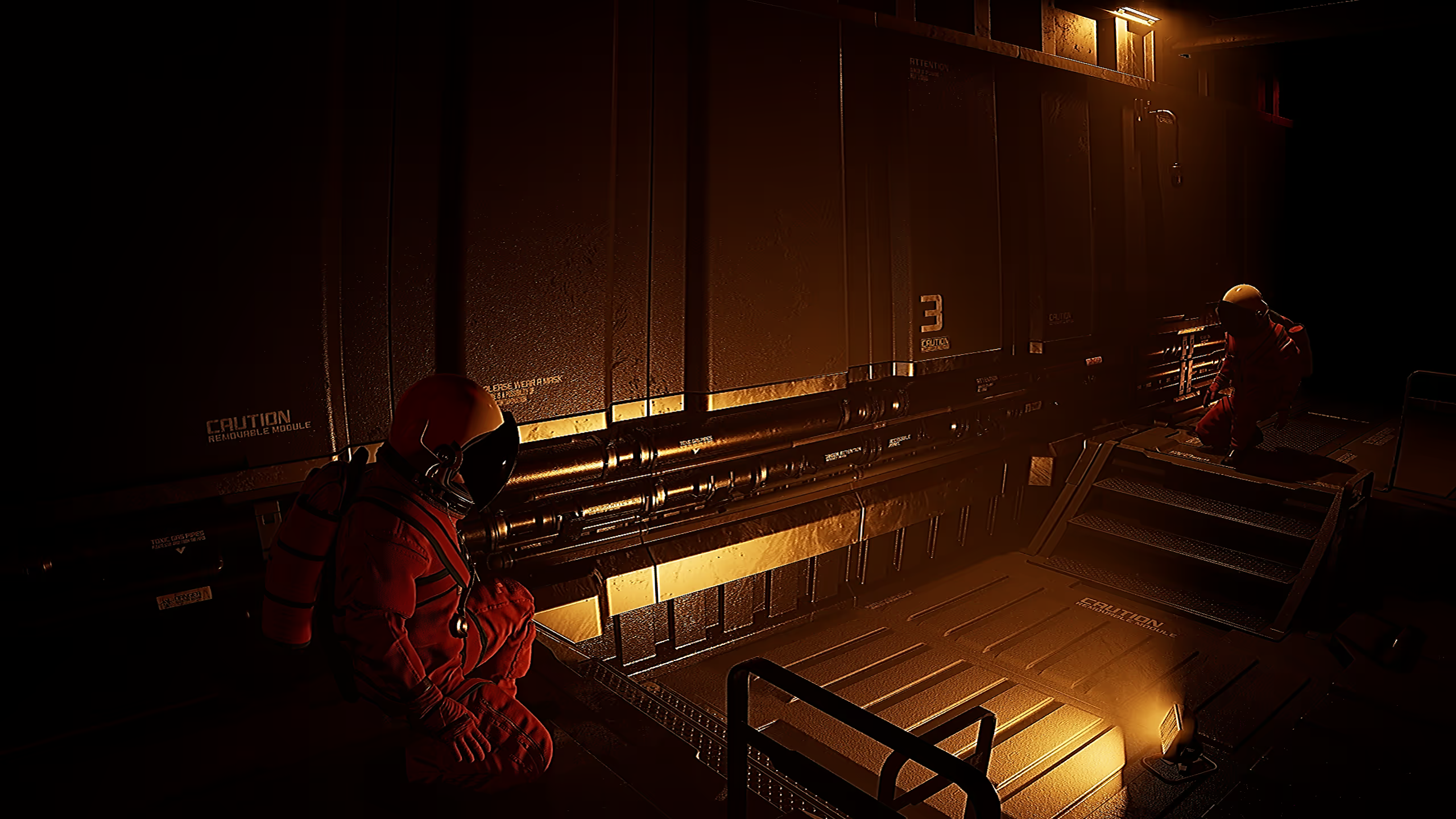

What carries over directly
Voice discipline. R.E.P.O. taught you that your microphone is a liability. That is true in Lunar Base Alpha too - threats hunt by sound, and proximity voice chat means a panicked shout genuinely relocates something toward you.
The extraction instinct. Knowing when a run is over and it is time to leave is the same muscle in both games.
What is different
- No physics hauling. R.E.P.O.'s comedy comes from fragile objects and clumsy hands. Blood Moon Horror puts your hands on circuits instead - rerouting power, restoring life-support, solving electrical objectives.
- 8 players instead of 6. More voices, more light sources, more ways to give the squad away.
- Light matters as much as noise. R.E.P.O. is primarily an audio game. Here, what your flashlight reveals is its own risk channel.
- No improvised weapons. You cannot swing anything. Not once.
- A story you can actually recover. NovaTech documents and logs explain the Red Horizon incident. Reading is optional, but the base makes more sense if you do.
Extraction horror, two different readings
R.E.P.O. and Blood Moon Horror are both filed under extraction horror, but they read the genre differently. R.E.P.O. makes the object the problem: something valuable, fragile and awkward has to survive contact with six clumsy people. The horror is emergent and frequently hilarious.
Blood Moon Horror makes the place the problem. Nothing you carry is fragile; the facility is the obstacle. Doors need power, sectors are locked, life-support is failing, and fixing any of it makes noise and light. The horror is less slapstick and more procedural - you are working a checklist while something works its way toward you.
Neither reading is better. They ask for different moods, and most squads want both on different nights.
What you do with your hands
The clearest way to feel the difference is to look at what your hands are busy with.
- R.E.P.O.: gripping, lifting, balancing, negotiating a doorway with someone who will not stop talking.
- Blood Moon Horror: tracing a circuit, rerouting power, reading a NovaTech log, holding a light steady on something so a teammate can work.
That single change cascades. Because nothing is fragile, panic does not cost you the loot - it costs you position. And because the objectives are fixed rather than opportunistic, a run has a shape you can plan against, which suits squads who like assigning roles.
Which should your squad play tonight?
Play R.E.P.O. for physics comedy and shorter, funnier runs with up to six.
Play Blood Moon Horror when you want the same voice-reactive tension stretched over a longer, quieter mission - and when you have more than six people. It is Early Access and still growing; the roadmap shows what is planned. The puzzle guide covers the electrical objectives you will actually be solving.
Questions, answered plainly
Is Blood Moon Horror the same as R.E.P.O.?
No. Both use voice-reactive threats and extraction runs, but R.E.P.O. is built on physics-hauling valuables with improvised weapons available, while Blood Moon Horror has no weapons, no hauling puzzle, and centres on restoring a lunar base's systems with up to 8 players.
Does Blood Moon Horror have proximity voice chat?
Yes, and it is central rather than cosmetic. Threats react to sound, so whispering, going silent, and splitting up to control noise are all real tactics.
Is there a free demo?
Yes. There is a free Blood Moon Horror demo on Steam, separate from the paid Early Access build.
Keep comparing
Same squad, different night. The full comparison table puts all six games side by side.
Try it with your squad
Blood Moon Horror is in Steam Early Access for Windows PC, and there is a free demo. Read the full game info or the FAQ first.